The Two Philosophies, Defined by Practice
The shorthand is familiar enough to anyone who reads about horror seriously: A24 makes slow, auteur-driven films for festival audiences; Blumhouse makes fast, cheap films for wide opening weekends. Like most shorthand, it obscures as much as it reveals. But 2016 was the year when the opposition hardened into something more than a talking point. Both companies released films that exemplified their methods with unusual clarity, and the combined output drew a line across the genre that critics, historians and industry observers have been standing on either side of ever since.
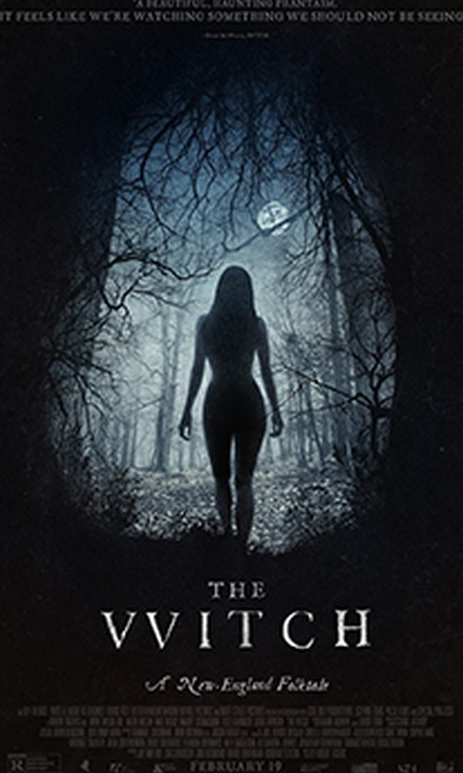
A24 had entered horror properly in early 2016 with Robert Eggers's The Witch, which had premiered at Sundance in January 2015 before its North American theatrical release in February 2016. The film's budget was modest by any studio measure, but every dollar was visible in its extraordinary period specificity — hand-hewn timber, period-accurate costumes, a New England landscape stripped to something close to pure dread. Eggers had cast Anya Taylor-Joy in a role that required her to carry an entire seventeenth-century worldview as a legible interior state, and the resulting film was not easily summarised. It was, by design, difficult. The difficulty was the point.
What A24's model demanded, structurally, was patience: patience in development, patience from the filmmaker, patience from an audience asked to sit inside a film that would not accelerate toward resolution. The Witch runs under two hours, but it moves at the rhythm of its own world rather than the genre's conventions. That is not an accident of temperament. It is a production philosophy enacted in runtime, tone and casting, and A24's release strategy — a limited opening, carefully built critical heat, a slow expansion — was its commercial expression.
Blumhouse's Counter-Logic
Blumhouse Productions, operating under Jason Blum's micro-budget model, approached 2016 from the opposite direction. The company's founding premise — low ceilings on production cost, talent sharing in back-end profits, aggressive wide-release strategies — had been proved repeatedly since Paranormal Activity, and 2016 gave the model two more useful data points. Mike Flanagan released Hush through Netflix under the Blumhouse banner, a siege film built inside a single location with a tiny cast. Ouija: Origin of Evil, also directed by Flanagan, went to theatrical release and performed solidly against its minimal production cost, which is precisely what Blumhouse's arithmetic requires: not a hit by blockbuster standards, but consistent profitability on a budget small enough to make modest grosses viable.
The Blumhouse philosophy is, in its way, just as disciplined as A24's — it simply disciplines different things. Where A24 controls the filmmaking environment to protect an auteur's vision, Blumhouse controls cost to protect a profit structure. The creative implication is real: a Blumhouse horror film is typically built for legibility, for pace, for an audience that can be converted at a multiplex on a Friday night without prior awareness of the director's previous work. Flanagan, to his credit, operated with considerable craft within those constraints, but the frame is set before the camera rolls.
What the Year's Other Films Confirmed
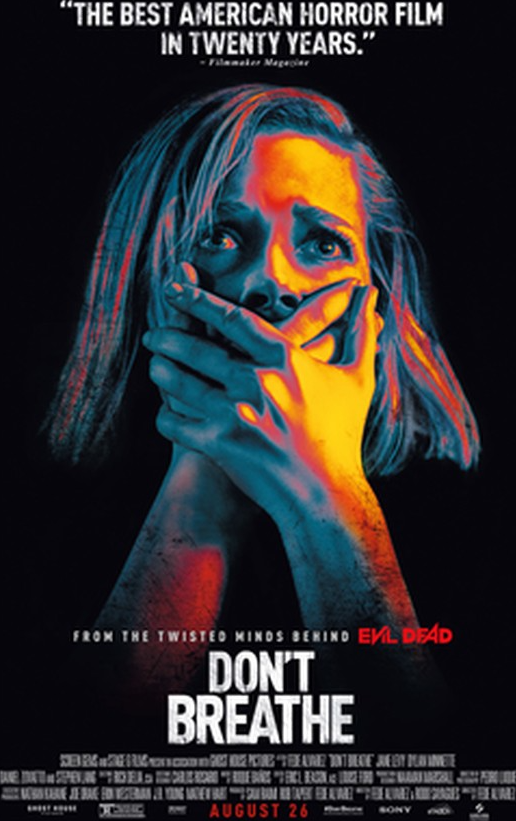
Neither pole tells the whole story of 2016. The year's wider field — Fede Álvarez's Don't Breathe, Jeremy Saulnier's Green Room, Na Hong-jin's The Wailing, Yeon Sang-ho's Train to Busan — demonstrated that horror's most interesting work was not always claimed by either company. Don't Breathe, distributed by Screen Gems and Sony, inverted the slasher's power structure with a discipline closer to Blumhouse economics than A24 atmosphere, yet it carried a formal rigour that studios running pure commercial logic rarely permit. Green Room, through A24, starred Anton Yelchin — who died in June 2016 at twenty-seven — and demonstrated that the company could accommodate genre work with immediate physical brutality, not only slow-burn folk horror.
What these outliers confirm is that the A24/Blumhouse binary is more useful as a description of philosophy than as a map of every significant film. The binary matters because it shapes what gets financed, what gets a distribution strategy and, ultimately, what reaches audiences — but the year's best films were often made by filmmakers who slipped between those poles, or operated entirely outside them.
What made the year clarifying, finally, was that both poles produced films worth talking about.
The Auteur Question
The deeper tension the year exposed was about authorship. A24's model is explicitly auteur-based: the company acquires films that have an identifiable directorial vision, and its marketing foregrounds that vision to audiences who treat the director's name as a signal of quality. That model has commercial logic in a streaming-era landscape where algorithmic recommendation struggles to differentiate between films and genre branding alone is insufficient to build an audience.
Blumhouse's model is, in formal terms, less interested in the auteur than in the property. The director matters — Blum has returned repeatedly to filmmakers who perform well inside his constraints — but the promotional hook is more likely to be premise and franchise than directorial sensibility. Flanagan's name became a meaningful brand only gradually and partly in spite of, rather than because of, the Blumhouse model.
The philosophical difference has a practical consequence for horror's long-term shape: A24's approach requires a continuous pipeline of festival discoveries and idiosyncratic visions, which is genuinely hard to sustain. Blumhouse's approach requires a continuous pipeline of viable premises at low cost, which is a different kind of pressure but structurally easier to maintain. By the end of 2016, both pipelines were operating — and the genre was being pulled in two directions simultaneously, producing work of genuine ambition at one end and efficient commercial product at the other, with relatively little in between.
The Witch was not a universal commercial success, but it built a serious reputation that compounded over years. The Blumhouse titles of 2016 made their numbers and moved on. Both outcomes were, within their own logic, successes — and the disagreement about which kind of success matters more is precisely the conversation the genre has been having since.