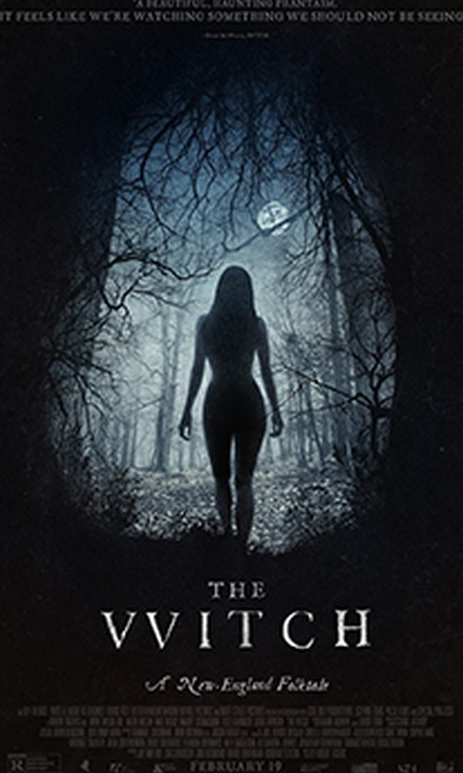
The film that started with a document
The project premiered at the Sundance Film Festival in January 2015, where it screened in the U.S. Dramatic Competition and won Eggers the directing award. That reception — serious, not merely enthusiastic — set the terms for how the film would be discussed through its entire release cycle. By the time A24 opened it in North American theatres in late February 2016, The Witch had already accumulated a critical profile that positioned it as something other than a commercial horror release, even as it performed like one.
A24 and the calculus of prestige horror
A24's acquisition of The Witch was a declaration of intent. The company had been founded in 2012 and had released prestige-adjacent genre work before, but The Witch represented a cleaner alignment between the studio's brand and the film's formal ambition. The marketing leaned into the polarising potential of the material — Eggers's film moves slowly, refuses catharsis in any conventional sense, and demands that its audience sit inside the period's theological terror rather than observe it from a safe contemporary distance. A24 knew that and amplified it, seeking an endorsement from the Satanic Temple, which generated coverage well beyond the usual horror-press circuit.
The film's domestic gross, as recorded by Box Office Mojo, reached approximately twenty-five million dollars against a production budget that has been reported in the low millions — a return that validated A24's acquisition philosophy. A limited opening expanded, audiences divided sharply between those who found the film genuinely frightening and those who expected something more conventionally eventful, and the discourse that disagreement generated proved more valuable than any positive consensus would have been. The Blumhouse model — high volume, low cost, genre familiarity — had demonstrated that horror could be reliably profitable. The Witch demonstrated that it could also be the most discussed film of its year.
What the farm actually was
The production design of The Witch is inseparable from its effect. Mark Korven's score and Jarin Blaschke's cinematography receive the attention, but the physical world the film inhabits — built on a farm site in Ontario rather than in New England, though Eggers specified materials, construction methods, and crop varieties drawn from period documentation — is the foundation everything else rests on. The production design was the argument the film was making: that if the material world of 1630 could be made accurate, the spiritual and psychological world would follow.
This is what the industry calls period accuracy in production design, and Eggers pursued it at a granular level that went well beyond what the camera would ultimately reveal. The farm's structures were built using timber-framing techniques consistent with early colonial construction. The crops planted — specifically Black Phillip's goats introduced into a landscape that had to read as marginal, subsistence-level — were chosen to reflect the precarity of the family's situation. The costumes were hand-sewn from natural fibres. None of this read as ostentatious; the accumulation was designed to disappear into authenticity rather than announce itself.

The cost of that approach was real. Eggers had developed The Witch as a script long before it was shot, and the feature took years to reach production because financing at the level required — enough to build something genuinely rather than simulate it — was not easily assembled for a period horror film with no stars and a first-time feature director. The eventual budget, small by any studio measure, was nevertheless enough to construct a physical world from scratch. That was the specific gamble: that the audience would feel the difference between a world built and a world dressed, even without knowing what they were responding to.
Anya Taylor-Joy and the debut
Thomasin, the eldest daughter at the centre of The Witch, is the film's moral and dramatic fulcrum. She is accused, she suspects herself, she is isolated by accusation and then by something worse than accusation — the slow dissolution of every family bond through fear. The role required an actor who could carry the weight of the film's final movement without the support of conventional narrative machinery. There is no rescue, no reversal, no moment in which the genre's comfort is offered and accepted. Thomasin meets what comes.
Anya Taylor-Joy was nineteen and had no significant screen credits when Eggers cast her. What the role demanded — a quality of exposure that reads as internal, not performed — she provided with a consistency that surprised everyone outside the production. The film's final sequence, which required her to occupy a register between terror and liberation, is the scene most critics cited when attributing the film's success. It also launched a career that would accelerate sharply in the years following: Split came in 2017, Thoroughbreds in 2018, Emma in 2020. But The Witch remains the foundational text, the evidence that the subsequent choices were not accidents.
The film's influence on the half-decade that followed it was substantial.
Her debut is worth isolating as a separate fact from the film's overall achievement because the two things happened simultaneously and the overlap tends to obscure them. The Witch would be a significant film in any discussion of 2016 horror even without Taylor-Joy; it is a more significant one because her performance clarifies what Eggers's formal decisions were in service of. Period accuracy and restricted geography and theological authenticity all existed to create the conditions in which a nineteen-year-old actor's face could bear the entire weight of the film's argument about faith, accusation, and female power in a world that had no language for any of it except the one it feared most.
The farm as method, not set
What Eggers built in Ontario in the years following his short was not a backdrop — it was a research position. The farm demonstrated that horror could be produced through scholarly rigour rather than commercial intuition; that the mechanisms of fear do not require special effects or genre familiarity to operate; that an audience conditioned by decades of post-Scream irony could still be made genuinely afraid by a language they half-recognised and a world that looked, down to its soil, like it had been lived in rather than constructed. The argument was made not in interviews but in the work itself — in the weight of hand-hewn timber and the sound of a goat and the particular quality of natural light falling on a face that had not yet learned to negotiate with a camera.
But the influence is inseparable from the method. What directors absorbed from Eggers was not a set of stylistic choices but a proposition: that the resources spent on research and construction are not wasted resources, that they return to the screen, and that an audience will feel their presence even when they cannot name it.