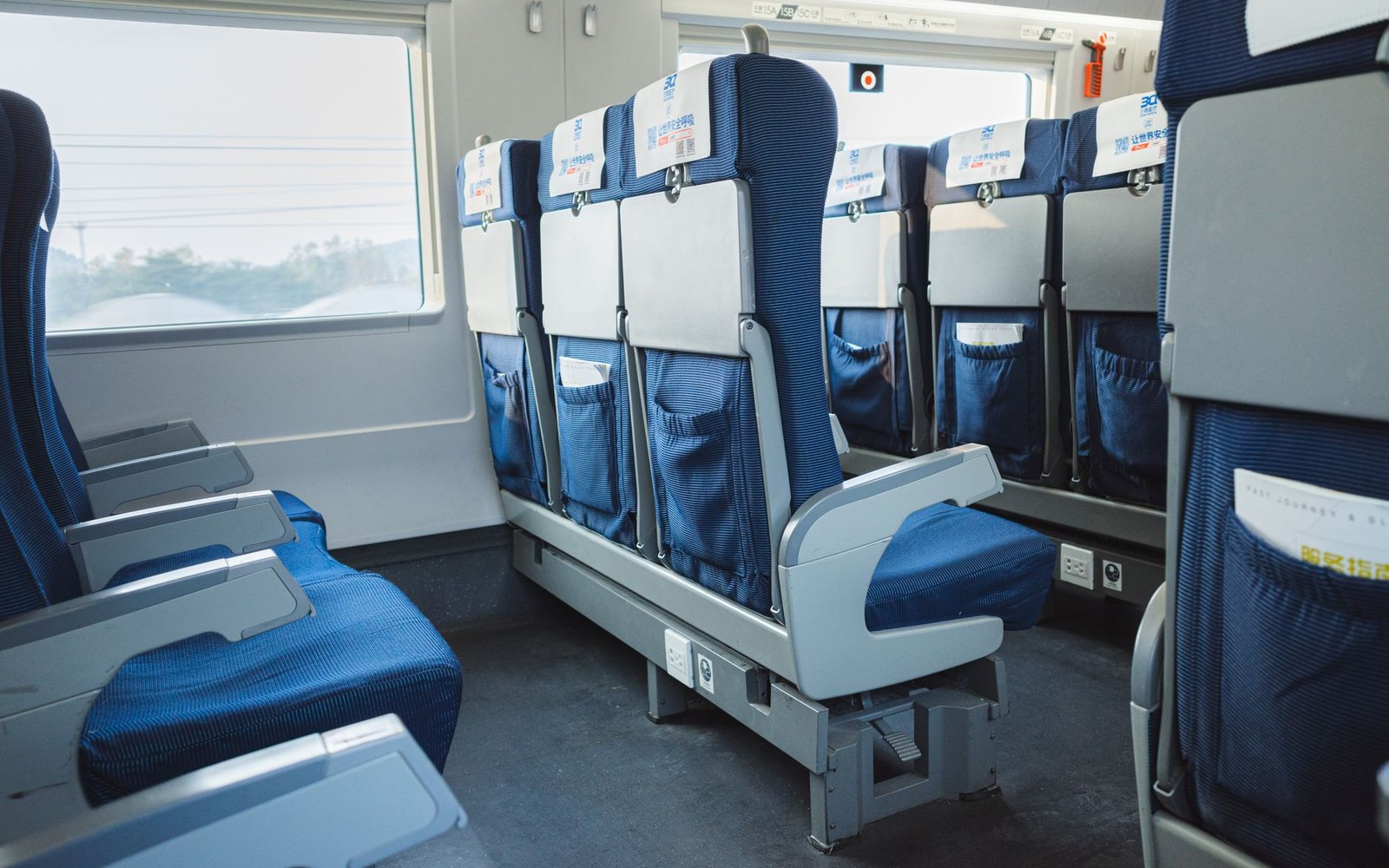
The Track as Dramatic Engine
The train carries seventeen carriages, and Yeon constructs the film's tension from the brute simplicity of that number. Movement in one direction means safety; movement in the other means death. Characters cannot scatter into open country or vanish into a city's warren of streets. They can move forward, toward the engine, or backward, into the infected carriages behind them. Every push through a sliding door is a gamble. Every carriage cleared has cost something — energy, a body, time — and the next door opens onto another calculation of the same kind. The geography produces decisions, and decisions produce character, which is a more elegant machine than most horror films bother to construct.
The film's principal character is Seok-woo, a fund manager travelling with his daughter Soo-an to Busan to see her mother. Gong Yoo's performance grounds the film in recognisable self-interest: Seok-woo is a man whose professional life has trained him to protect his own position first. Yeon uses the class allegory built into the carriages quite literally — the train's social divisions correspond to economic ones, with the well-dressed passengers of the first-class and business carriages making the choices that doom other people. When the outbreak begins in the rear carriages and spreads forward, the survivors' instinct is to lock the doors and keep the threat out, which translates directly into leaving people to die rather than risk contamination. Yeon has said in interviews that the train's spatial hierarchy made this theme almost automatic: the architecture of the vehicle is already a diagram of how Korean society distributes risk and reward.

Numbers and the Body Count
The film was made on a budget of approximately nine billion Korean won — roughly eight to nine million US dollars at the period exchange rate — and according to Box Office Mojo earned over ninety-three million dollars worldwide, making it one of the highest-grossing Korean films released internationally to that point. Those numbers mattered to the genre conversation of 2016 precisely because they arrived without a studio apparatus behind them: Train to Busan was produced by Next Entertainment World and distributed internationally without the wide American theatrical launch of a Hollywood production, yet it outperformed many of that year's mainstream horror releases.
What the film understands about zombie cinema — a subgenre that Train to Busan both revives and interrogates — is that the undead are most frightening when they are fast and numerous inside a space that cannot be widened. George Romero's zombies filled shopping malls and airports; Yeon's fill corridors that are exactly as wide as two people side by side. The infected move in fluid, collapsing waves, their bodies piling and cascading in a manner that cinematographer Lee Hyung-deok renders in continuous moving shots that refuse the safety of quick cuts. The claustrophobia is not manufactured by editing — it is engineered into the train itself, and Yeon simply films what is there.
By the film's final act, the characters who have survived are those who chose, at different moments, to help someone they had no personal obligation to assist. Seok-woo's arc is not subtle — it is clear, earned, and emotionally costly. The film does not mistake cynicism for sophistication. It argues, in the genre's bluntest and most honest register, that the person standing in the doorway deciding whether to open it or lock it is the only question that matters, in a zombie film or anywhere else. Train to Busan structures that question with the precision of a timetable, and delivers its answer at the end of the line.