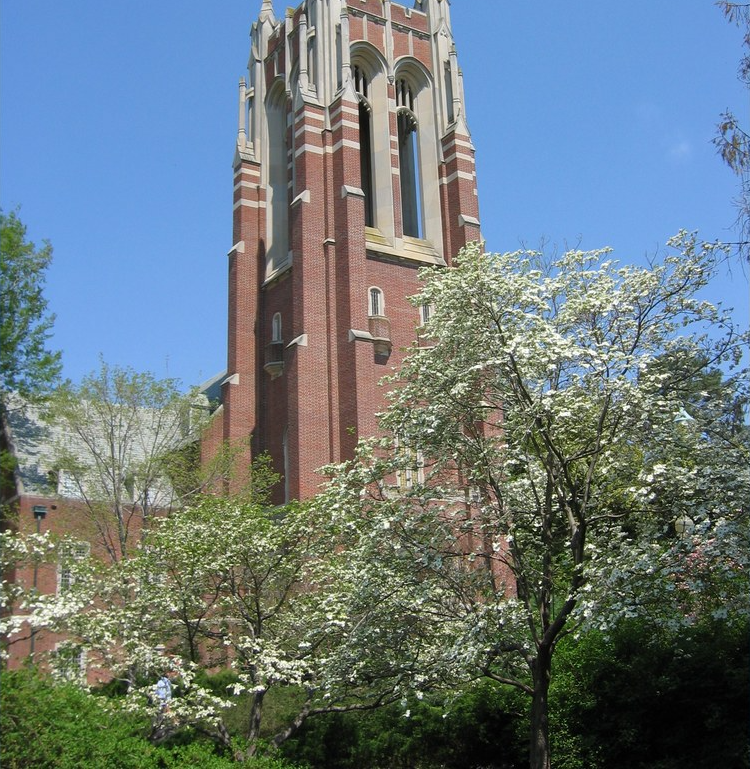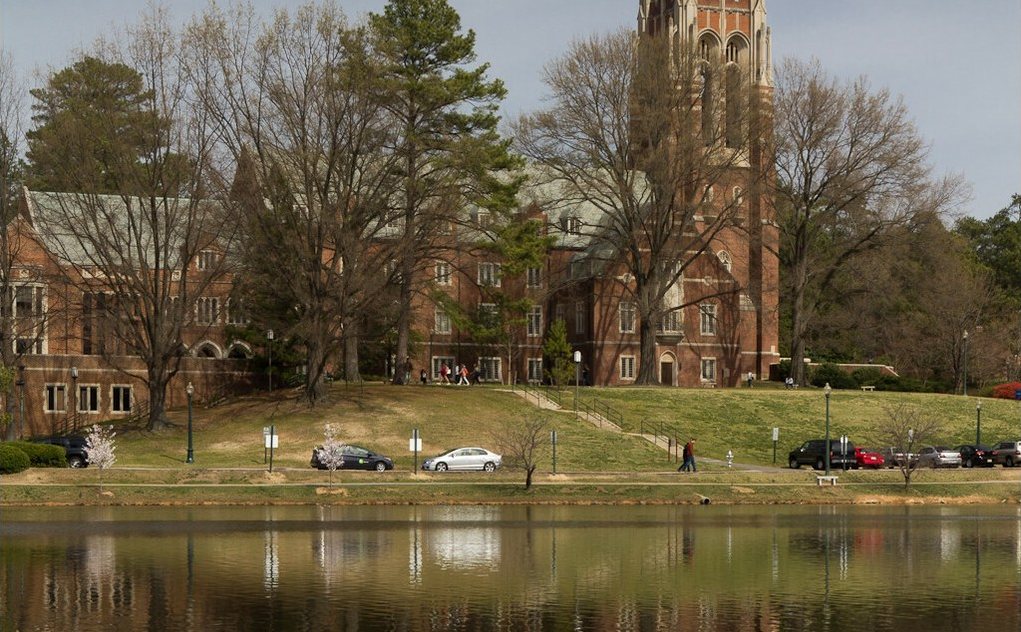
Canonical Gothic, Put to Sinister Use
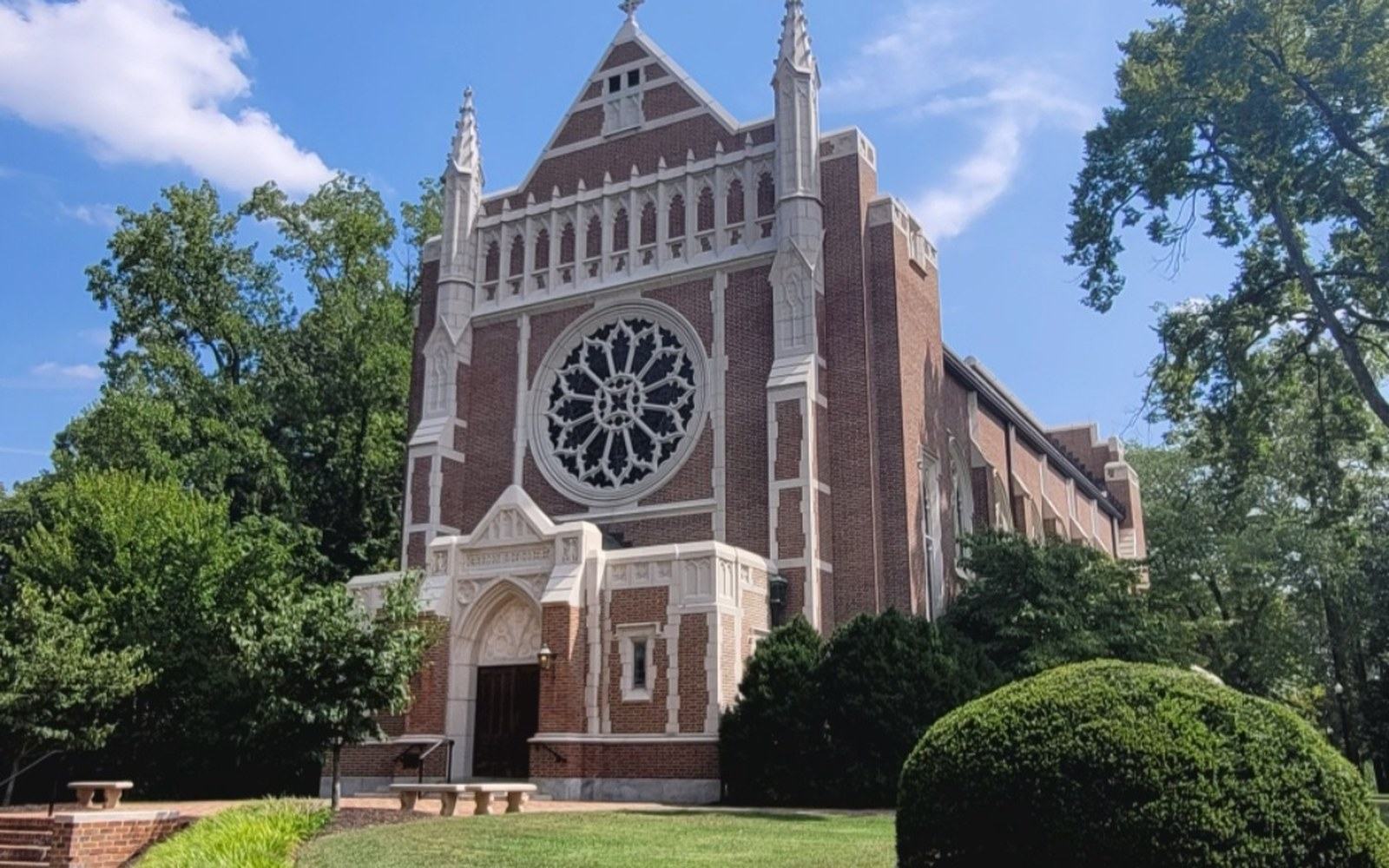
The chapel's interior furnishes the scene with what no set-build could cheaply replicate: a vaulted ceiling, wooden pews arranged to channel focus toward a single point, and the ambient authority of an ecclesiastical space pressed into secular mischief. Gothic Revival architecture was designed, historically, to produce reverence through verticality and shadow, and Wadlow's camera uses exactly those qualities — the height above the players, the stone that absorbs light rather than reflecting it — to make a parlour game feel genuinely threatening. The students sit in the pews as if attending a service whose liturgy is accusation and elimination.
On screen, the architectural details that read most clearly are the chapel's lancet windows, which admit low, lateral light without exposing the space to brightness, and the stone columns that divide the nave into shadowed bays. Both features serve the scene's logic: partial visibility, the sense that someone in the group is concealed even in plain sight. The University of Richmond's own documentation of the campus places Cannon Memorial Chapel as the building that anchors the university's visual identity, which is why it anchors the film's as well.
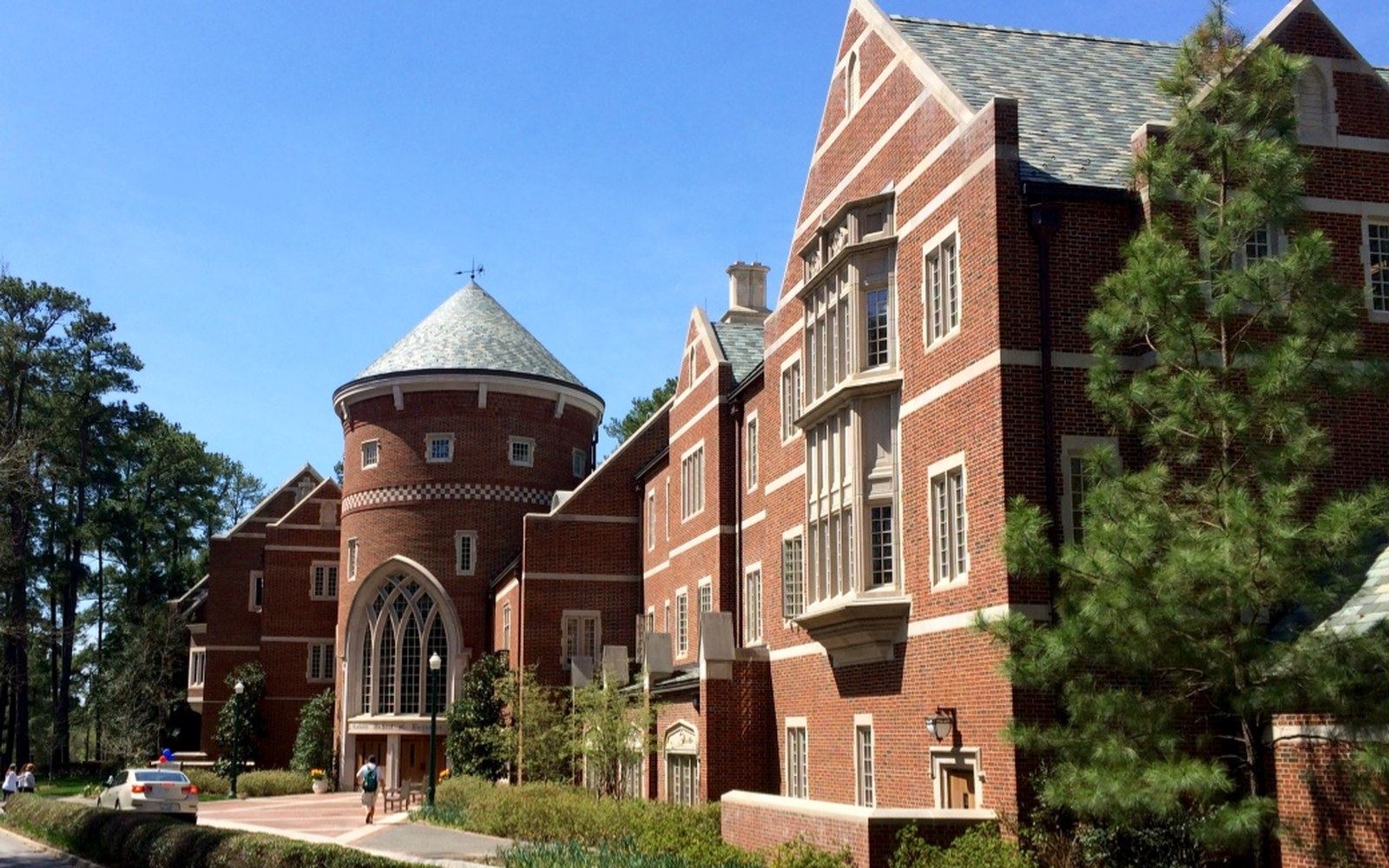
The selection of the chapel also carries a tonal argument. The game the students are playing — inventing a serial killer named the Wolf — is essentially a kind of communal fiction-telling, and performing it inside a space associated with communal truth-telling gives the scene an irony that a dormitory common room would not have delivered.