
The Group Text as Horror Engine
The film's central mechanism is deceptively simple. A circle of prep-school students, killing time with a social deduction game called Wolf, decide to escalate the fiction. They compose a group text describing a fictional serial killer — location, method, physical description, an orange ski mask — and send it across the school network. The message travels faster than any rumour could on foot, and because it arrives on a personal device, it carries the intimacy of something addressed directly to the reader. Nobody sent this to a hallway; they sent it to you.
What Wadlow and co-writer Beau Bauman understood, and what gives the device its residual unease even now, is that the group text does not merely spread a story — it formally enacts what sociologists call urban-legend transmission. The narrative gains credibility precisely because it circulates. Each recipient assumes that others in the chain have assessed the claim and found it worth forwarding. The result is a closed information loop inside a closed community, and closed communities — boarding schools especially — are structurally ideal petri dishes for exactly this kind of contagion. The campus provides the compressed geography; the phone provides the speed; the social hierarchy of the game's players provides the motive.
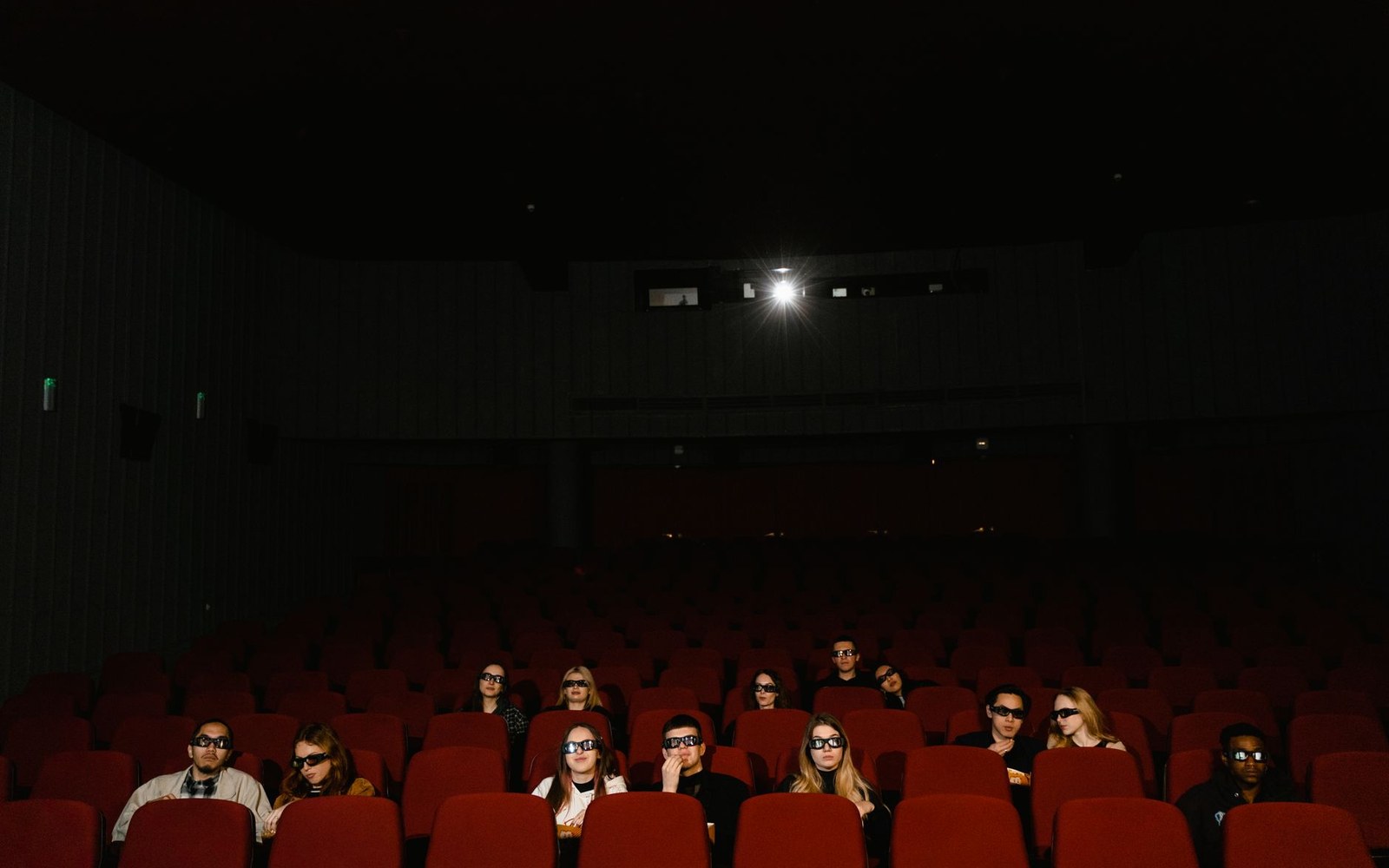
That hierarchy matters. The group constructing the fictional Wolf is not a democracy. Owen (Julian Morris), the new arrival looking to find his footing, proposes and shapes the hoax. Dodger (Lindy Booth) is the one who knows the school's folklore, who understands instinctively what the message needs to say to be believed. The others follow. What the film dramatises, underneath its slasher mechanics, is the specific social dynamic of information authority — who gets to name the threat, and why the group accepts the naming. The text message is the vehicle, but the performance of credibility is the engine.
In 2005, this was precise social observation. Mobile phones had reached saturation among American teenagers, but the grammar of group messaging was newly formed. A text was still closer to a phone call than to a tweet — direct, personal, not yet assimilated into the background noise of perpetual digital communication. A message arriving from a known contact, corroborated by the fact that others in your social circle received the same message at the same moment, had an epistemic weight that is genuinely difficult to recover now. The Blair Witch Project had shown six years earlier how a distributed narrative — one that reached audiences through multiple channels and appeared to precede the film — could function as a machine for belief. Cry Wolf does something related but smaller and more concentrated: it runs that mechanism through a single network, inside a single institution, in a single evening.
The ur-text lurking behind all of this is not a film but a folk tale. Urban-legend transmission as a documented social phenomenon — studied through examples ranging from the hook-handed killer to contaminated Halloween candy — depends on the same grammar the film deploys: a credible source, a plausible location, a specific detail that anchors the abstraction. The orange ski mask is the specific detail. It is too precise to be invented, the message implies. Real threats come with identifying features. The hoaxers know this; they are students who have absorbed the conventions of the genre they are now generating.
The group text is sent as a joke and received as a joke, until it is not. The mechanism that made the hoax convincing is the same mechanism that makes the real danger unrecognisable when it arrives. This is the Aesopian logic underneath the slasher architecture: cry wolf often enough, fluently enough, and the community you are performing for will be precisely calibrated to disbelieve the signal when it becomes genuine. The phone that starts the game cannot stop what the game releases. In 2005, that irony arrived via SMS. The technology has since changed in almost every respect. The structure of the trap has not.