
From Short Film to Starting Gun
The Chrysler Million Dollar Film Festival was, by design, a single event. Chrysler launched the competition in 2002 as a promotional venture — a corporation buying itself association with independent cinema, offering substantial cash prizes to short filmmakers in exchange for brand visibility and the goodwill that comes from being seen to fund art. The competition attracted submissions from across the United States, each entrant making the case in short form that they had a feature-length sensibility waiting for resources.
Jeff Wadlow and Beau Bauman entered a short film, and the feature they went on to make with the prize rested on the premise that became Cry Wolf: a group of prep-school students who invent a fictional killer, only to find the fiction turning real. The core dramatic logic — a community that manufactures a threat until a genuine one arrives — drew directly from the Aesop tradition of the boy who cried wolf, translating folk-tale structure into the register of the contemporary teen slasher. The short was tight, its concept commercially legible, and the judges responded accordingly. Wadlow and Bauman won.
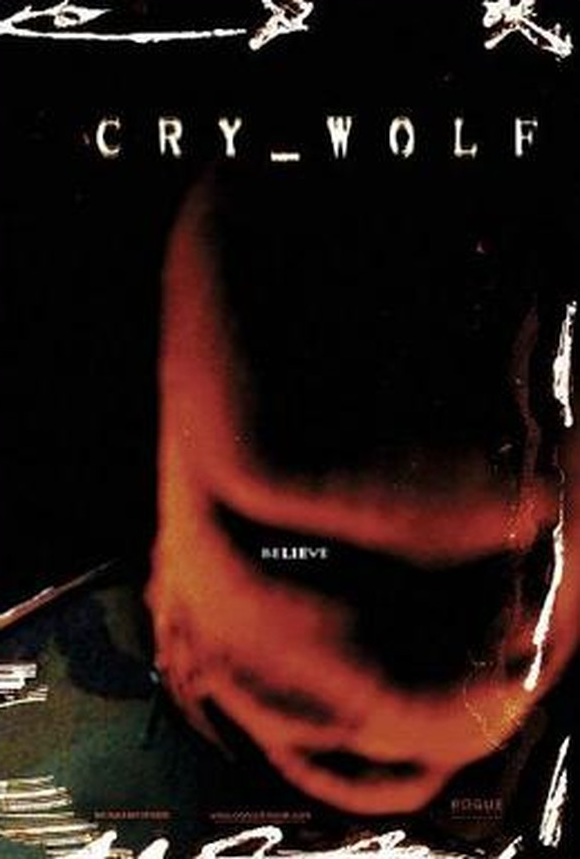
The prize money was the kind of figure that changes what is possible. The Chrysler competition was structured around genuinely significant awards, not honoraria — the sums involved were large enough that winners could treat the grant not as development funding but as production capital. For Wadlow and Bauman, it meant the difference between a short film and a feature, between a proof of concept and a film that could be submitted to a distributor. They moved immediately toward pre-production on a full-length version of their story.
What the Money Built
The Chrysler prize did not merely fund a shoot; it determined the shape of the entire project. With production capital secured, Wadlow and Bauman could approach the University of Richmond as a genuine production rather than a student crew looking for favors. The university, a collegiate Gothic campus in Richmond, Virginia, granted the production its first-ever feature-film access — an arrangement that gave the film its visual identity. The pointed arches of Cannon Memorial Chapel, the still water of Westhampton Lake, the symmetrical dormitory corridors: none of those images exist in the finished film without the prize that made the production credible enough to negotiate them.
The budget that resulted was modest by Hollywood standards but workable for an independent genre feature shot on a single-campus location. Casting became possible at a level the short could never have reached. Julian Morris, making his film debut, took the lead role of Owen. Lindy Booth, Jared Padalecki, and, in the film's most remarked-upon piece of casting, Jon Bon Jovi as the journalism teacher Mr. Walker — none of that ensemble was accessible at the short-film stage. The prize, in a direct line of consequence, is what put those names in the same film.
Wadlow directed; Bauman produced. The collaboration that had won the competition held through production, and the finished feature was shot in 2004, two years after the Chrysler award. That gap — competition win to completed film — reflects the real work of pre-production: location access negotiations, casting, script development, and the logistical planning required to shoot a horror film on an active university campus without disrupting academic life. The prize was the starting pistol, not the finish line.
After the Competition
The Chrysler Million Dollar Film Festival did not run again. As a one-time promotional event, it existed to serve a specific corporate moment, and Chrysler did not repeat it. That makes Cry Wolf a singular artifact of a particular funding mechanism: a studio-quality independent horror feature that exists because an automaker decided, once, to fund short cinema. The competition's legacy, to the extent that it has one, runs almost entirely through the film it made possible.
The film opened on over two thousand screens — a wide release unusual for a prize-funded independent — and earned its budget back. The Chrysler competition had not merely given Wadlow and Bauman a production; it had given them a film the market treated seriously.