
The Weight of Unreliability
Dodger is the engine of the film's central mechanism. She is the one who proposes the Wolf game, drafts the fictional serial killer's profile with Owen (Julian Morris), and guides the group text message that sets the plot in motion. She is also, consistently, the character Owen cannot read — and, by design, neither can the viewer. The script, which Wadlow developed with Beau Bauman, places her at every structural hinge: she establishes the rules, she escalates the stakes, and she is present at moments that could plausibly mark her as either victim or perpetrator. Carrying that double function requires a performance that withholds without going cold, and that is precisely what Booth delivers.
What makes the performance technically interesting is its management of register. Dodger operates at a pitch of controlled amusement — she treats the game as play while Owen gradually panics — and Booth keeps that register consistent even as the film's tonal ground shifts beneath it. When events begin to outrun the fiction the students invented, her stillness reads differently in retrospect than it did on first viewing. That retrospective instability is not accidental; it is the whole point, and it depends entirely on a performance that never oversignals. An actor who nudged the audience toward suspicion too early would collapse the final act; one who played Dodger as simply warm would make the ending's reveal feel dishonest. Booth walks the line with unusual precision.
After the Film
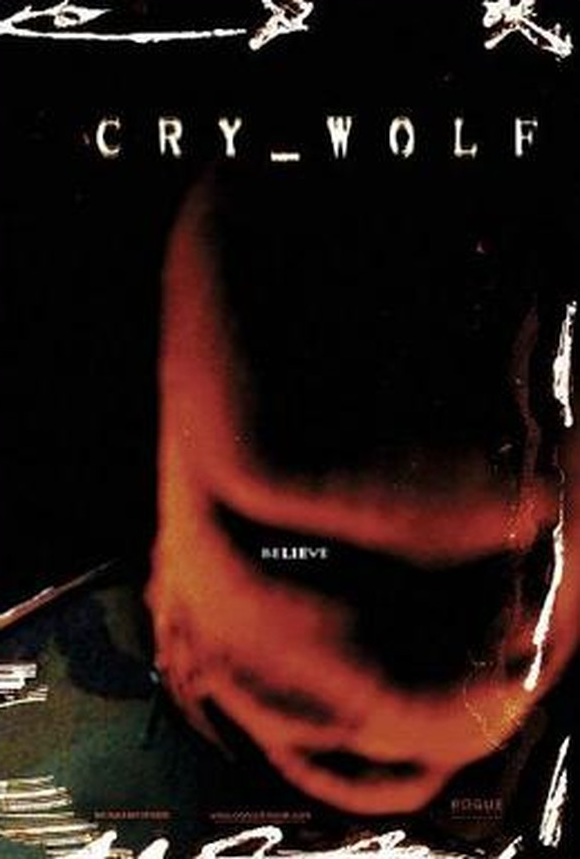
Cry Wolf opened in September 2005 through Rogue Pictures, the genre arm of Focus Features, and performed modestly. Booth's work drew some notice in genre circles, but the film's muted commercial reception limited the role's immediate leverage. Her subsequent career tracked a course common among performers who distinguish themselves in specialty-distributor releases: sustained, varied, rarely headline-making.
She returned to Canadian television with regularity, taking a prominent role in a long-running genre series — a part that ran for multiple seasons and gave her the kind of long-form character development that a single feature could not. The role required comic timing and emotional accessibility, qualities that sat on the opposite side of the dial from Dodger's opacity, and Booth handled the shift without strain. Later, she appeared in The Librarians (TNT, 2014–2018), again in an ensemble genre context, cementing a television presence in fantasy-adjacent material.

What the Cry Wolf role reveals, in retrospect, is a range that her subsequent bookings did not always demand. Dodger requires a performer willing to be genuinely disliked — to let suspicion accumulate without defending the character against it. That willingness is a specific kind of professional confidence, and it is not the quality that soft-focus genre television typically asks for. The two halves of Booth's career are not contradictory, but they do suggest that the more demanding work arrived first.
The film's architecture means Dodger cannot be evaluated the same way on a second viewing as on a first, which is a structural compliment to both the screenplay and the performance. Films that depend on retrospective re-reading live or die on whether the original viewing is internally consistent — whether the performance holds up as one reading rather than a planted lie. Booth's work here doeshold up. Dodger's composure, her slight remove from the group's escalating fear, her moments of apparent tenderness toward Owen: each survives the revelation because Booth never played them as deception. She played them as character. Making that feel earned was hers.